



Chronic disease and metabolic dysfunction affect large numbers of North Dakotans.
Several new programs coming soon to rural areas aim to reverse that by getting people moving and making healthy, whole foods more accessible.
“What I want people to know is that moving is the most important thing we can do to stave off chronic disease, and to change the trajectory of it if you’re starting to experience it,” said Pat Traynor, interim commissioner at ND Health and Human Services.
“That is a huge, huge problem for us as humans, and there’s a huge cost to it over time,” Traynor said.
Of the $199 million in Rural Health Transformation Program (RHTP) grants coming to the state over the next year, a total of $3.5 million is dedicated to three programs encouraging movement, healthy eating and community cohesiveness.
That includes $2.5 million for rural areas to establish community walking programs, $700,000 for piloting before-school physical education programs at schools, and another $300,000 for establishing or scaling up community garden programs.
These address two pillars of the Make North Dakota Healthy Again program, ND Moves Together and ND Eats Well.
“We want to make it contagious, making walking and eating well contagious,” Traynor said. “And let’s do it together, so we’re socially connected, because we have a crisis of friendship, a crisis of loneliness, we have anxiety and depression.”
Trending in the wrong direction
A look at the numbers shows how unhealthy many have become.
A total of 9.8% in North Dakota have diabetes, and another 32.2% have prediabetes, according to American Diabetes Association numbers.
Around 31% of the adult population in the state is obese, a rate that could reach 54% by 2030, the New England Journal of Medicine projected in 2023.
Cardiovascular disease is the leading cause of death in the state and around 30% of all North Dakotans have high blood pressure, North Dakota Health and Human Services figures show.
On the mental health side, 18% reported their mental health was “not good” eight or more days in a month, data from 2025 shows. Around 25% reported some form of mental illness over the past year including depression, anxiety and hopelessness.
Walking together
A total of 35 applications for community walking programs were submitted, Traynor said, with around 20 expected to be selected.
One hopeful applicant is First District Health Unit, which serves seven counties in the north-central part of the state.
Holly Brekhus, Minot-based executive director of the unit, said their proposal centers on finding a coordinator who will then utilize the public health nurses in each community to create walking programs across the area.
Proposals must include at least one community walk once per week and another two that can be individually done and logged, she said, with nurses also able to provide nutrition guidance and ensure people are getting their normal health screenings.
“It would kind of vary by community,” Brekhus said. “If it’s a tight-knit group, and they want to walk together three times a week, great.”
Communities, no matter where they are, will likely need to collaborate with schools and other organizations that have indoor space that could be utilized for walking programs, particularly in deep winter or during other inclement weather periods, she said.
Gardening together
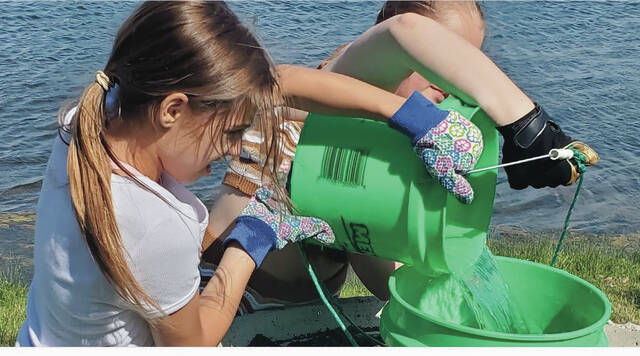
For the community garden program, 45 applications have come into HHS, with around 10 to be selected as pilots.
Gina McKee, who runs Prairie Wild Garden Company, has submitted a grant request. Earlier in the year McKeee had been contracted to set up the Towner Community Garden project through a grant from the local soil conservation district to use a vacant lot in the town.
Now that this has been established, a RHTP grant could help cover some operational costs and double the amount of raised beds and help with other improvements, McKee said.
She’s hopeful the grant will come through, particularly since the grant materials requested already established plots of outlines for programs that could be scaled up soon.
“It was excellent timing with the grant availability,” McKee said. “Had we not started yet, and already had some funding, it probably wouldn’t have worked for us this year.”
McKee said she hopes to work with NDSU Extension, which could hold educational workshops and training at the site, and sees potential collaboration with other groups like 4H.
Julie Garden-Robinson, a nutrition and food safety professor at NDSU Extension, was already selected for an RHTP grant for just over $500,000 as part of the ND Eats Well Together pillar.
The grant will help NDSU Extension expand on existing outreach programs about nutrition and healthy eating and increase the ability to collaborate on projects across the state, like the community garden program.
“We’re excited to have this funding because there’s a lot of things that we never could do because we have limited funding,” Garden-Robinson said.
Zero-hour PE programs
Another grant will support around 10 pilot programs for establishing “Zero-hour PE” initiatives at schools.
This would allow for the creation of structured 30-45 minutes of physical activity before school for middle and high school students with a component for tracking that activity through fitness tracking wearable devices.
So far, 23 applications have been submitted, Traynor said.
“We know physical activity improves academic performance as well as gets people hooked on activity that otherwise wouldn’t have this opportunity, because they might not be in a sport,” Traynor said.
Traynor said funding for these programs will be available to ensure kids in rural areas can get to the sessions outside of the normal busing operations.
The North Dakota News Cooperative is a non-profit news organization providing reliable and independent reporting on issues and events that impact the lives of North Dakotans. The organization increases the public’s access to quality journalism and advances news literacy across the state. For more information about NDNC or to make a charitable contribution, please visit newscoopnd.org.
Leave a Reply