
In early May of 2025, Kathy Kraft, of Devils Lake, ND, was sitting at her kitchen counter doing some paper work and eating breakfast. Without any prewarning (typical for strokes), she had a stroke, passed out and fell from her stool to the floor.
This set off a “hard fall” alarm on her Apple Watch which alerted her emergency contacts (all three of her adult children) and the local police department. The family could not get in contact with her on either her cell or home phone as she was unresponsive.
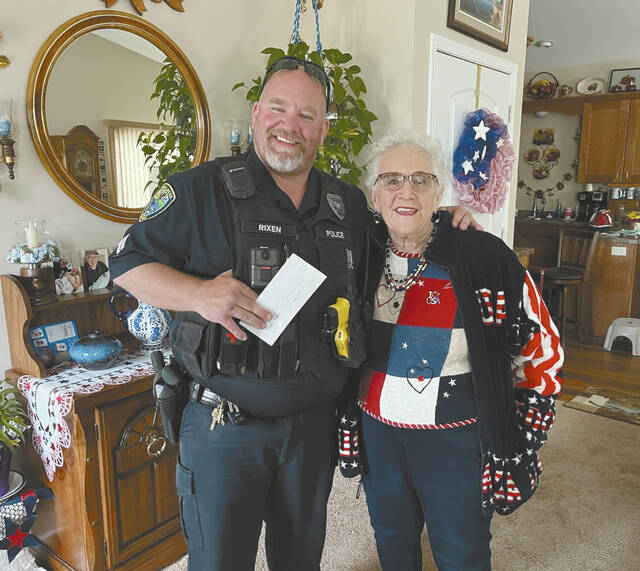
The police arrived at her home and could see her lying on the floor through the front window. She was aware of their program to give garage code access or a key to them for entrance in an emergency. They were able to use her garage code to gain access without breaking down her door.
Her daughter, Deb Stemmerman, called the police department knowing 911 would not get her to the emergency line in DL. The police switchboard told her that they were already at her mother’s home and had called for an aid car.
She called the ER in Devils Lake to let them know to contact me when she got there. She was still unresponsive at this point.
An emergency CT scan showed an apparent stroke. Adequate and successful treatment of strokes is extremely time sensitive. Stemmerman spoke with the ER physician and we tried to piece together when was time zero as this was an unwitnessed event.
One of the savvy young techs in the ER gained access to her watch and was able to tell that she had been up and had several steps already that day. The police officer, Darren Rixen, said she was dressed and eating breakfast by all appearances, so they called time zero when the fall alert went off. The alerts also notified her family of her location and when it changed from home to the hospital.
She was unconscious for about an hour, Kraft says. The stroke happened at 9:15 a.m.
Since the stroke was so recent they were able to treat her with a thrombolytic drug (an injection to break up or dissolve the clot in her brain causing the stroke). She did regain some consciousness but was still very foggy and confused. She was air lifted by helicopter to Fargo – the nearest stroke center. Repeat imaging there showed that the clot was not completely dissolved so they were able to do a thrombectomy (to go in with a catheter from her groin to the clot in the brain an suck the clot out). Within a few hours she was talking and alert with very little residual affect on follow up imaging of her brain or with symptoms. Time is of the essence with these.
She was ready to be discharged home after two days. However, many strokes are caused by a heart condition called A Fib or atrial fibrillation (when part of the heart fibrillates or quivers and doesn’t pump normally – often asymptomatic). When this happens a small clot can form and then when the heartbeat goes back to normal it is pushed out of the heart, travels to the brain and causes a stroke due to blockage of blood flow and oxygen to the part of the brain that it is occluding or blocking.
Although she wasn’t showing this on the heart monitor at the time, she needed to be tested for this. Therefore, they implanted something called a loop recorder – just a very small device under the skin on the chest that remotely monitors her heart rhythm. This did end up showing that she has A Fib – even though only a small percentage of the time, that is enough for a clot to form in the heart. When it dislodged, it traveled to her brain causing the stroke. Her other imaging studies there did not show significant narrowing or atherosclerosis in the carotid arteries (the main blood flow to the brain) that can also be the culprit in strokes. In retrospect her Apple Watch did give her an A Fib warning in the past as it does monitor for that, too, but she either didn’t see it or didn’t know what it meant so she didn’t say anything.
Kraft now has to be anti coagulated (on a blood thinner) for life to keep her from forming another clot.
Some of the key takeaways are:
- Fast recognition and treatment. Without her watch alert, there is no telling how long before she would have been found and likely would not have been able to get brain sparing treatment. There are other emergency systems for elderly people but she doesn’t like the life alert thing and didn’t want that. Fortunately she fell off of her stool and wasn’t driving or in bed or something when it happened either.
- The police responding quickly and appropriately calling for medical care as well as having access to her home – she just heard about this program on the radio one morning and signed up. This needs to be something elderly or disabled folks are aware of. (Contact the Devils Lake P.D. or Fire Department if you wish to sign up for this service)
- The proximity to a hospital – a big concern with rural areas and critical access hospitals – many that are closing due to recent changes at the federal level.
- Access to a competent and nearby (Fargo) stroke center with up-to-date treatment ability and cardiac services for the heart monitoring.
There is a well known acronym for stroke recognition BEFAST. There is a ton of information on the American Stroke Association website. The month of May was “Stroke Awareness Month” but this is good information any time.
Kraft swears by her Apple Watch and keeps it charged up and ready to go, “If it weren’t for my Apple Watch, I wouldn’t be here,” she says.
The other thing that helped to save her was giving the police department and fire department the codes to get into her house in an emergency situation. Both Stemmerman and Kraft want the Devills Lake Journal readers to know how important these two things were to her survivial.
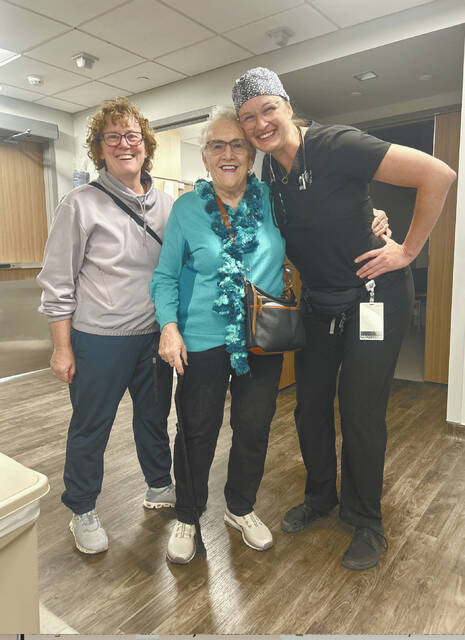
Kraft is grateful for all those who helped her survive this ordeal, especially her daughter, Deb Stemmerman, from the state of Washington, who is a doctor and who came to stay with her for 10 days to help with her recovery.
Kraft adds, “this was only her second helicopter flight,” but she doesn’t remember much of it, only that the nurse riding with her was very calming as she kept her awake and alert. She did admit that she liked the time she had her first flight in a helicopter so much better as they flew over the Hawaii Islands her first time in a helicopter while there on vacation.
Leave a Reply