
North Dakota farmers face unprecedented price increases heading into the planting season due to supply chain constraints stemming from the Iran war.
A hit to North Dakota’s agriculture economy could put more pressure on farms trying to stay afloat as well as impact jobs in communities where farming is the primary economic driver.
Valerie Wagner, president of the North Dakota Farm Bureau said the longer farmers spend time in this “unprecedented area” adds more uncertainty for decisions about planting going into the spring.
“Most of the people I’ve talked to didn’t contract everything they thought they’d need, because they were hoping that with some of the things that were going on and some of the promises that were being made, that maybe prices would actually come down,” Wagner said.
Instead, they’ve gone much higher.
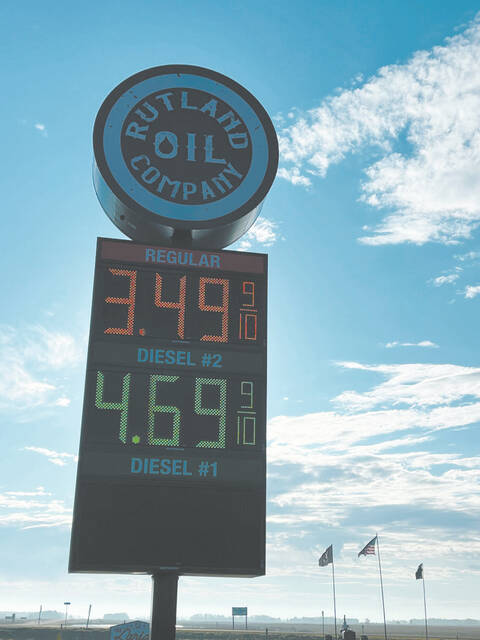
Average diesel prices are closing in on $5 per gallon in North Dakota and are nearly $1.50 higher per gallon than they were at this time last year.
On April 7, the U.S. Energy Information Administration forecasted that elevated fuel prices are expected to extend through the year.
“That impacts absolutely everything,” said Evan Montgomery, ND Soybean Council Vice Chairman and a third-generation grain farmer from Grand Forks. “Every day we get out of bed we have to pay a fuel bill.”
High fertilizer costs are a major concern with urea prices spiking 47% since February and nitrogen fertilizer prices up 30%, according to the American Farm Bureau Federation.
An AFBF poll of over 5,000 farmers nationwide in early April found that 70% are unable to afford all the fertilizer they needed, with the rate in the Midwestern region at 48%.
One positive is the Midwestern region had the highest rate of pre-booked fertilizer in the country, with 67% reporting they’d purchased before the price increases.
Matt Perdue, president of the North Dakota Farmers Union, said the skyrocketing costs of fuel and fertilizer are a major concern.
“It’s important to recognize that in the case of fertilizer, costs were already at elevated levels,” Perdue said. “It’s a major challenge for producers in terms of what it means right now going into this growing season.”
One of the biggest concerns is for farmers who did not secure contracts.
Even with supply constraints and potential shortages, pre-booked fertilizer doesn’t necessarily mean it will get to the farm in a timely manner.
“Another issue we have to consider, just because you contracted that fuel and that fertilizer, unless you took possession of it at the time, unless you actually took delivery, you’re not guaranteed the product,” Wagner said.
A needed shift
Higher prices and potential shortages could mean less fertilizer use and lower crop yields.
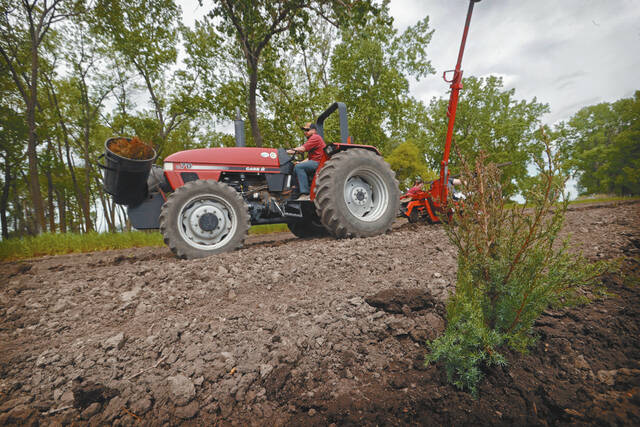
Perdue said options for producers include shifting to other commodities, including pulse crops, soybeans, lentils, and peas that may need less fertilizer.
“I think some producers are going to be making those decisions anyway, given the price pressure,” Perdue said. “If there are significant shortages at the local level, you’re going to see producers have to make some game time decisions on what they’re planting and what their application rates are.”
The Persian Gulf accounts for 36% of global supply of urea, 29% of anhydrous ammonia, 26% of diammonium phosphate (DAP) and 13% of monoammonium phosphate (MAP).
“If we have fertilizer shortages, it’s going to be impossible to make up for that shortfall,” Perdue said. “There’s no great plan B for covering that shortfall.”
Looking further out, Perdue and others hope this can spur the U.S. industry to increase its domestic supply and production of fertilizers as well as more competition in the marketplace.
While a shift to more domestic production would be welcome, it wouldn’t happen overnight.
“Any time you can source domestically and not get caught up in any type of geopolitical or international disputes, that’s better, but that’s a long-term process,” said Josh Gackle, chairman of the American Soybean Association. “You don’t start up a fertilizer plant in six months.”
The addition of soybean crushing facilities in North Dakota and elsewhere has helped increase the domestic market for soybean producers and a push for more domestic production of renewable ethanol, diesel and other biofuels could also help.
“We’re hoping that the industry, the crushing plants in North Dakota and others, can continue to keep their operations going and grow and expand and continue to build that domestic market for what we’re growing here as farmers,” said Gackle.
State support already at record levels
In mid-March, the North Dakota Industrial Commission allocated another $100 million for the Bank of North Dakota’s 2026 Farm Stability Loan Program on top of the nearly $400 million already set aside for the program.
The total is more than double the record of $190 million previously set aside for the program and fast approaching triple if more allocations are made.
The program helps producers restructure debts incurred in the past two years at lower interest rates.
John Bitzan, Menard Family Director of the Sheila and Robert Challey Institute for Global Innovation and Growth at North Dakota State University, said the program was boosted both because of continued high input prices and also fallout from U.S. tariffs and trade retaliation from China.
“This means U.S. farmers are able to sell less of their products. That has put financial pressure on them. And now, with the current war, this is causing more distress to farmers and uncertainty as well for the future,” Bitzan said.
The North Dakota News Cooperative is a non-profit news organization providing reliable and independent reporting on issues and events that impact the lives of North Dakotans. The organization increases the public’s access to quality journalism and advances news literacy across the state. For more information about NDNC or to make a charitable contribution, please visit newscoopnd.org.
Leave a Reply