
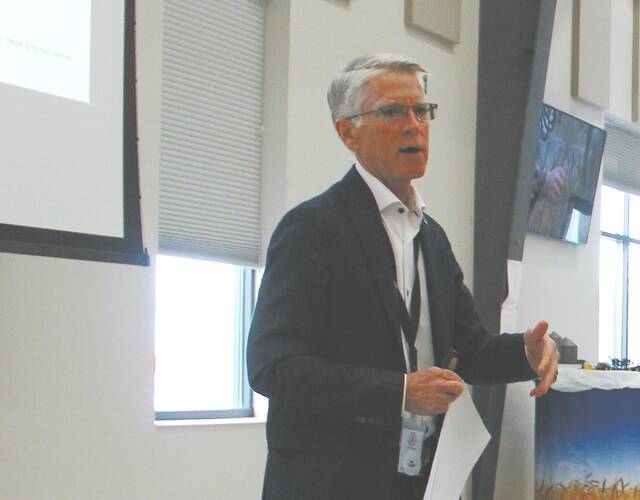
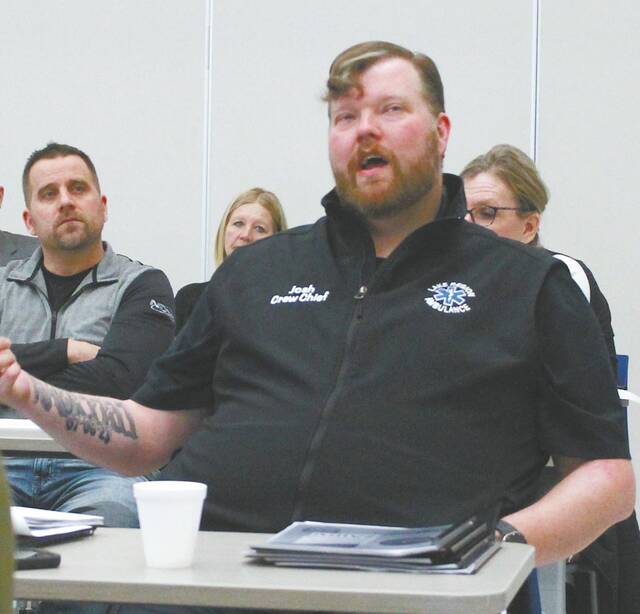
Pat Traynor, who is the North Dakota Health and Human Services Commissioner, was in Devils Lake at the Hofstad Ag Center for a special meeting with rural health care providers and other interested individuals. With him was Jodi Estenson, Director of Strategic Partnerships & Stakeholder Engagement, and he also mentioned Emily O’brien, Deputy Commissioner, who worked on the proposal Traynor was to narrate.
Traynor began his presentation by acknowledging his many connections to Devils Lake and the Lake Region including family and personal memories.
The gist of his talk centered around an opportunity for North Dakota to apply for and potentially receive a billion dollars each year for five years that has the potential to transform rural health care in our state and perhaps other states, as well. He did state at one point that what can be done in North Dakota could then be something all other states could adapt to their needs and situations.
Traynor stated that Devils Lake, which is District 15, was designated not just rural, but “Frontier” by US HHS.
The first statistic he quoted was “17.5 percent of children in North Dakota have contemplated suicide.” Most likely the number is even higher than that alarming number, he added.
The majority of the attendees at the event were health care providers, but there were people in attendance from education, both elementary, middle school and high school, but also from higher educationas well as numerous interested individuals from other walks of life.
“We have a once-in-a-lifetime opportunity before us, but we need to act now to take advantage of this. The funding cannot be carried over, it needs to be obligated by and spent before October 31, which begins a new year,” Trayor explained.
He emphasized that in North Dakota we don’t just have a shortage when it comes to healthcare, we have a crisis!
The first slide of his presentation was titled “ND Moves Together” and it discussed the most impactful things Americans can do to prevent chronic disease: become and stay physically active – specifically to meet the full Physical Activity Guidelines which are 150+ minutes of moderate aerobic plus 2+ days of strength training per week. That will lower individuals’ risks with Type 2 diabetes, heart disease/stroke, hypertension, obesity and depression/anxiety.
The “ND eats well together” is a clear evidence-based breakdown of how diet (independent of physical activity) impacts the top chronic conditions in America. It claims a “healthy diet impacts risk reduction, prevention and disease progression” benefits for the same five conditions the first slide listed.
As he discussed these topics, Traynor was promoting planning and brainstorming ways to capitalize on this opportunity for funding various facets of healthcare aiming to utilize the state’s critical access hospitals – like the hospital in Devils Lake, for example – and referral centers keeping care closer to home by the following:
- Strengthen and stabilize rural health workforce
- Make North Dakota Healthy Again
- Connect technology, data and providers for a strong ND
- Bringing high quality health care closer to home, wherever possible, eliminate the lengthy trave4l for care and treatment
Workforce retention is critical for doing all this, Traynor pointed out.
But don’t wait, some funding is already made available and some applications are due April 30, 2026 by 5 p.m. CT.
Traynor talked at length about the possibilities and encouraged “thinking outside the box” dreaming, too. He said keep applying, don’t give up, you never know what might lead to an answer to a critical issue that we haven’t even been made aware of yet. “Be creative, and don’t give up!” Traynor added.
In his vision of North Dakota it would be named the “healthiest state in the union” leading the way for all other states to follow suit.
For more information go to hhs.nd.gov/rural-health-transformation
Leave a Reply