
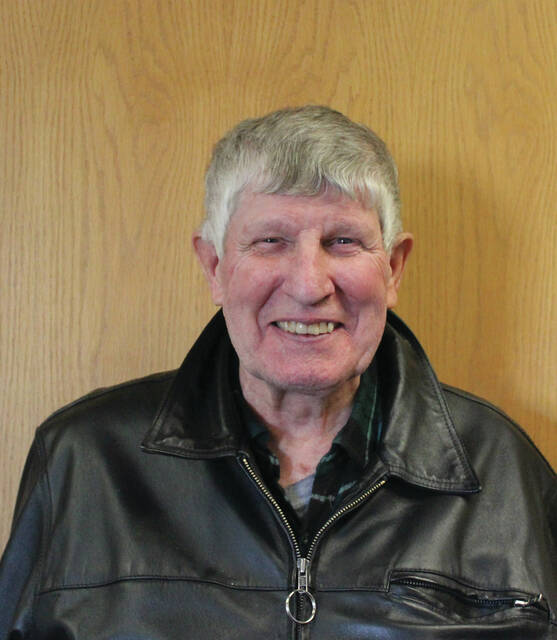
A Message from Garcia
The “sweat”, or hot steam bath, or sauna is practiced all over the northern polar region, among the indigenous people of North America, Europe, and Asia. The Dakota People seem to have promoted the use of the Sweat Lodge for religious, healing, praying, and steaming oneself over hot stones. The Dakota term for a sauna is “Ini” (EE-nee), to take a bath accompanied by song and prayers.
I arrived at Spirit Lake in the early spring of 1966. I never heard of the “Sweat” until about 1970 when a man by the name of James Eagle built a dome shaped lodge below the St. Michael Store. He located a spot in the woods near the edge of Mission Bay. He went around inviting people to come and have a sweat with him. He built the lodge, collected rocks and firewood as well as required equipment. One dark Fall evening a group of adults came and formed a large circle around the sweat lodge and fireplace. Many stood with folded arms showing doubt, while observing the doings. Some must have known what a Sweat was, but others, including myself, never heard of this event. The next day the whole reservation was buzzing about Jim Eagle and his sweat.
Without going into details, Jim had a traditional ceremony, praying, but no singing. Both male and female were participants. Eventually he collected a small core group including myself. Unbeknownst to me, the onlookers questioned tribal elders. They said that long ago their parents and grandparents used to have the Sweat Lodge Ceremony. However the church, school and United States Government spoke against anything cultural. It was forbidden to speak the Dakota language, stamping out anything Indian when they went to boarding school. By the 1960’s only few participated in the pow-wow. At the same time the Woman’s Liberation movement was brought forward which said that females could do anything a male could do. This era now allowed females to attend “sweats”. Traditionally only males could participate; the females could internally “clean” themselves by their monthly menses. Traditionally men were afraid of the women’s life-giving blood. Females were barred from attending religious and social events, during their special time of the month. A custom kept today.
The elders told me the use of the sweat lodge was defunct by the time veterans returned from World War Two. Formerly if you killed an enemy you were doctored in the lodge. The sweat was used to wash away the terrible events veterans saw and participated in. Unfortunately the ceremony was outlawed and these veterans turned to alcohol to fill the void, helping to erase their war experiences from their minds.
The Sweat Lodge (Initipi).
Each Sweat leader does the ceremony his way. There is no right or wrong way. Perhaps a spirit came to him and gave advice, or from a book, or an elder helped to understand a change to be made. The sweat lodge could be religious using the Sacred Pipe, or healing where medicine is used, prayers asking for help, or a combination.
Traditionally two or more virgin boys were selected to prepare the site. They collect willow branches about the thickness of a human thumb. The lodge circle about eight feet in diameter is leveled off. Then holes are placed in the dirt matched in pairs. The willow branches are thrust into the holes and bent over to form an arch. The two halves are tied together. Now the boys gather sage leaves and scatter them like a carpet in the lodge interior. Some lodges have cardboard or rug remnants which are then covered with sage. One must remember the four smoke medicines (tobacco, sage, sweetgrass, and cedar) Each has a designated use (prayer, disperse evil, smudge ceremonial equipment, aromatic / medicinal use.
A pit is dug in the center of the lodge, with enough space to place the heated rocks within. A shallow trench is dug from the pit outside through the door and into the fireplace, where the rocks will be heated until red hot. Some lodges use fluffy feathers to mark a path instead of the trench. Now the boys gather oak and ash firewood. They also search for round rocks, formerly about as big as a man’s head. Now rocks of any size, but leaning to being round, if possible, are selected. A rock, in the Dakota language is INYAN, but the rock used for the sweat are called a TUNKAN (a sacred rock), The “Rock” is the oldest spirit of the TobTob Kin (The Sixteen Spirits). The Rocks are addressed as TUNKANSINA (Grandfather).
End part 1: To be continued
Leave a Reply