
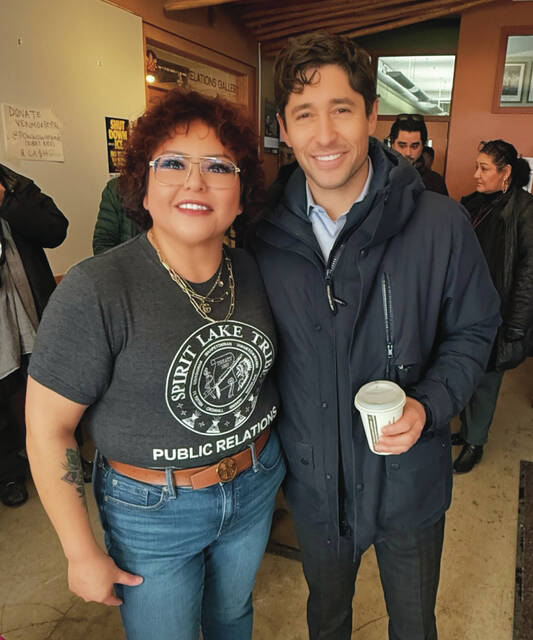
DEVILS LAKE – Spirit Lake Tribe Public Relations Specialist Vicki Alberts just returned from a trip to the Twin Cities, where she coordinated an event to help tribal members get identification. “Tribal IDs and Certificates of Degree of Indian Blood (CDIB), as well,” she said on Monday, Jan. 26. “We actually assisted about 72 tribal members from ages 4 on up.”
Alberts added that approximately 612 members of the Spirit Lake Tribe currently live in the state of Minnesota, with over 120 of them living in the Twin Cities metropolitan area.
As the current ongoing immigration crackdown continues in the Minneapolis-St. Paul area, Native Americans are being detained in the process, mistakenly identified as undocumented immigrants.
Alberts cited the story of the four Oglala Sioux tribal members taken into custody approximately two weeks ago. According to a press release from the Oglala Sioux Tribe, released by Tribal President Frank Star Comes Out on Facebook on Tuesday, Jan 13, the the men were arrested in Minneapolis during the crackdown and the tribe has formally notified senior federal officials that their detention is “unlawful and constitutes a direct violation of binding treaties, federal law, constitutional protections and the United States’ trust responsibility,” demanding “immediate federal action.”
According to a report from the Associated Press, last year, Navajo Nation President Buu Nygren said that several tribal citizens reported being stopped and detained by ICE officers in Arizona and New Mexico; he and other tribal leaders have advised their members to carry tribal IDs with them at all times. Last November, Elaine Miles, a member of the Confederated Tribes of the Umatilla Indian Reservation in Oregon and an actress known for her roles in “Northern Exposure” and “The Last of Us,” said she was stopped by ICE officers in Washington state who told her that her tribal ID looked fake. A member of the Salt River Pima-Maricopa Indian Community in Arizona was arrested in Iowa in November and was mistakenly slated to be turned over to ICE before the error was caught and she was released, according to local media reports.
While Alberts said there have been no confirmed reports thus far of any Spirit Lake tribal members being taken into custody, Native American residents of the Twin Cities area are feeling understandably tense. “The general consensus that we got from individuals who came in and saw us last week was that many people said they are fearful and are just staying home,” she said. “They’re not going anywhere; they’re limiting their activity in and around where they live.”
Alberts said that tribal members either lacked identification or wanted the extra security of having tribal documents which she was able to provide last week, and she returned to the Twin Cities later on Monday, Jan. 26 with plans to help more tribal members starting the next day on Tuesday, Jan. 27. “I will be there tomorrow doing IDs and Wednesday (Jan. 28) distributing IDs,” she said, noting that it was a multi-departmental effort within Spirit Lake Nation assisting in this project. “That’s one of the best things about the Spirit Lake Tribe, is that while we don’t have all the resources, the one thing that we do have are people who care.”
As an example, she mentioned a designated Spirit Lake staff member who personally transported tribal IDs and CDIBs this week from their offices on the reservation to the Twin Cities, as regular delivery services used last week ran into delays. “Unfortunately, our machines (used to create the documents) aren’t able to leave the premises,” Alberts said. “Our enrollment staff wants to be available because they have been receiving … an increase in requests for tribal IDs, even locally, and CDIBs for members and also for lineal descendants.”
Alberts said that while the workload on this current project has been challenging, the end results make it all worthwhile. “I’m a department of one,” she said with a laugh. “But, the work right now, it is slightly overwhelming, but it’s important. It’s important work and it’s important for us to be able to take care of our tribal members, because we’re saving them the time that it would take for them to come and return home, because generally, the only way you can get … a tribal identification document is return back to your home reservation and see your local enrollment office, so I’m glad that our Tribal Council was considerate of their tribal members who live away.”
Alberts and other Spirit Lake staffers also helped members of other tribal nations connect with their local enrollment office to obtain documents, including the Rosebud Sioux Tribe based in South Dakota and Lac Courte Oreilles Tribe based in Wisconsin. Members making those connections on their own could sometimes be challenging, as some were unhoused while others lacked ready access to transportation to reach their tribe’s event in the metro area. Alberts added that there are plans to host similar events in North Dakota. “We’re looking at Fargo, Bismarck and Grand Forks for sure,” she said.
She added that she and other departments of Spirit Lake Nation are looking at ways to assist tribal members outside their ability to easily travel. “Spirit Lake is unique in the fact that it has a very high population of tribal members who live in the Washington State area, and unfortunately we’re not able to go out there, but we are trying to come up with a plan to help members who live further away than the North Dakota-Minnesota area,” she said.
Tribal leaders release joint statement
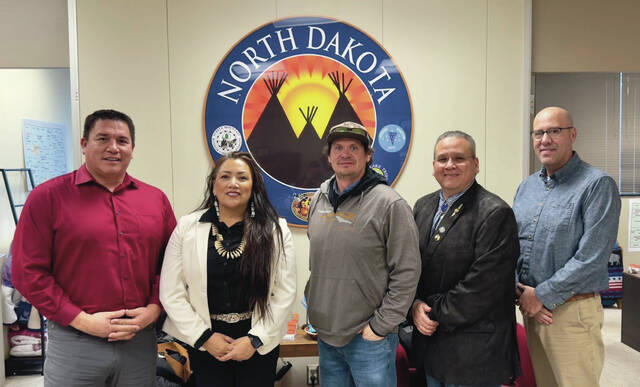
Tribal leaders from the Dakota/Lakota Nations of Spirit Lake, Crow Creek, Rosebud Sioux, Sisseton Wahpeton Oyate, Standing Rock and Yankton Sioux released a joint statement saying that they “stand together in deep sorrow, empathy, and solidarity with the families and communities affected by recent federal enforcement actions in Minnesota,” following the recent fatal shootings by federal officers of 37-year-old writer and mother of three Renee Good on Jan. 7, and 37-year-old ICU nurse Alex Pretti on Jan. 24 during immigration enforcement operations in Minneapolis. The statement also mentions an enrolled member of the Sisseton Wahpeton Oyate taken into federal custody by the Federal Bureau of Investigation (FBI).
“We extend our deepest condolences to the families who have lost loved ones as a result of recent enforcement activity,” the statement said. “We also hold the people of Minneapolis in our thoughts during this time of grief, uncertainty, and heightened tension. No family or community should have to endure fear, violence, displacement, or separation in the places where they live and work. Our hearts are with all those whose lives have been disrupted or torn apart by these events.”
“As Dakota, Lakota, and Indigenous Nations, we do not condone violence in any form,” the statement said. “The use of lethal force and enforcement practices that endanger human life erode trust, deepen historic trauma, and disproportionately impact marginalized communities. Indigenous people have endured generations of displacement, surveillance, and systemic harm, yet continue to seek dignity, justice, and safety wherever they reside. From these histories comes a responsibility to seek better and mutual relations, grounded in respect, restraint, and humanity.”
According to their statement, the combination of incidents involving deadly force and the detainment of Native American citizens during the recent crackdown have caused alarm among Indigenous communities across the Twin Cities metro area.
According to the statement, information regarding potential charges of the unnamed tribal member, who was taken into custody during ongoing federal law enforcement operations in Minnesota, currently remains unclear. “These incidents have intensified longstanding concerns about the safety, treatment, and rights of Native people living in urban areas far from their home reservations,” the statement said.
In response, Spirit Lake Chairwoman Lonna J. Street has communicated with the U.S. Department of Justice, while Sisseton Wahpeton Oyate Chairman J. Garret Renville has been in contact with the U.S. Department of Homeland Security after confirming that the fellow tribal member was in FBI custody. Also, the Bureau of Indian Affairs and the Department of the Interior have also been engaged to reaffirm the federal government’s responsibilities to all tribal nations and the protection of its citizens. “These leaders will continue to work with federal offices to seek transparency, accountability, and assurances that tribal citizens are treated lawfully, respectfully, and safely in all enforcement contexts,” the statement read.
(If necessary, the story can end here in the print edition with the following tagline: “To read more of this story, go to devilslakejournal.com/news/10443/spirit-lake-tribe-provides-ids-for-members-in-twin-cities-during-immigration-crackdown-as-tribal-nations-make-joint-statement/)
The Minneapolis-St. Paul metropolitan area is home to one of the largest urban Native American populations in the United States. More than 35,000 American Indian and Alaska Native people live throughout the Twin Cities metro area, representing dozens of tribal nations, including significant numbers of Dakota and Lakota citizens. “This population exists largely as a result of historic federal policies — including the Indian Relocation Act of 1956 — that intentionally displaced Native families from their homelands under assimilation-era programs,” the statement said. “These realities must be understood and respected in the conduct of any attempt of federal enforcement activity.”
“Indigenous peoples are American citizens under the Indian Citizenship Act of 1924, and the federal government carries a continuing fiduciary duty to Tribal Nations as a political class of people,” the statement continued. “This duty includes safeguarding constitutional rights, ensuring due process, and preventing unlawful detention or harm to tribal citizens — regardless of where they live.”
The statement also affirmed that tribal nations will continue to ensure that enrolled citizens living away from their home reservations have access to proper tribal identification. “We will continue efforts to expand access to tribal IDs and related documentation, recognizing that identification affirms citizenship, protects rights, and supports safety wherever our people reside,” the statement said.
While recognizing the strong emotions stirred by these recent events, Native American citizens were strongly urged to prioritize safety. “We are asking our tribal members not to engage in protest activity that could place individuals at risk of harm, particularly in situations involving armed enforcement,” the statement said. “There are meaningful ways to support families and neighbors — through community care, education, advocacy, and mutual aid — that do not expose our people to dangerous confrontations.”
“Our teachings remind us that we are not separate from one another,” the statement continued. “As Indigenous peoples, we hold the belief that we are all related — Mitákuye Oyás’iŋ. This principle calls for accountability without dehumanization, for justice without violence, and for policies rooted in dignity rather than fear.”
In closing, the statement said, “As Dakota and Lakota leaders, we stand united in our responsibility to protect our citizens, honor our ancestors, and safeguard future generations. We will continue to speak with clarity, compassion, and strength on behalf of our people. We stand together. We remember. We endure.”
The statement was signed by Street and Renville, Crow Creek Sioux Tribe Chairman Peter Lengkeek, Rosebud Sioux Tribe President Kathleen Wooden Knife, Yankton Sioux Tribe Chairwoman Chelaine Knudsen and Standing Rock Sioux Tribe Chairman Steve Sitting Bear.
Safiyah Riddle, Rebecca Santana and Graham Lee Brewer of Associated Press contributed to this report.
Leave a Reply