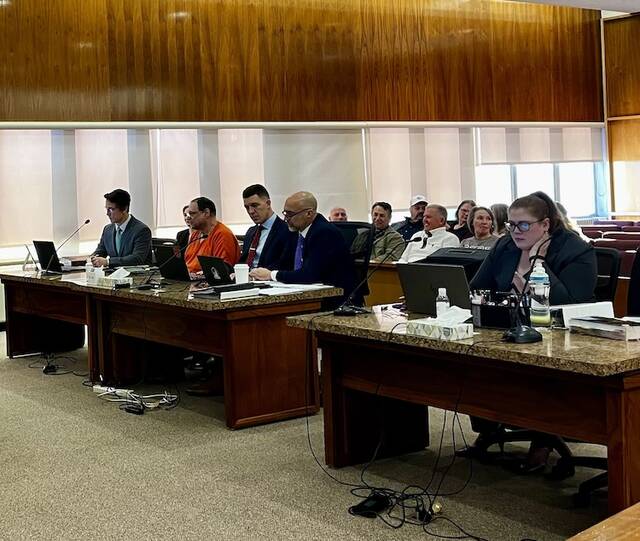
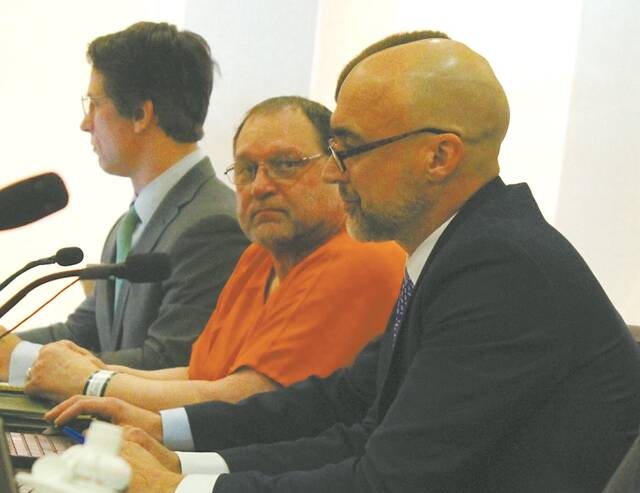
DEVILS LAKE, N.D. – Lawyers for plaintiff Werner Kunkel, a 65 year-old Devils Lake resident convicted over 30 years ago of murder, appeared with him in a two-day evidentiary hearing that began Jan. 7 at the Ramsey County Courthouse. They’re alleging that evidence from the original trial had been suppressed, including witness statements that allege Fassett was still alive past the date the state said he had been killed.
Kunkel was convicted in August of 1995 for the brutal murder of Gilbert Fassett, whose body was found Aug. 10, 1986 at Ski Jump Hill on the Spirit Lake Reservation. Fassett had been stabbed over 100 times. Kunkel was arrested for the murder in January of 1995. During trial, the prosecution presented circumstantial evidence that Fassett had last been seen alive with Kunkel on Aug. 1, 1986 and relied heavily on witnesses who testified that Kunkel had admitted to killing Fassett.
Representing Kunkel were attorneys with the Great North Innocence Project, which included its legal director James Mayer, Dane DeKrey and Bruce Ringstrom Jr. The nonprofit organization conducts in-depth investigations and provide pro bono representation for clients they believe to have been wrongfully convicted. Kunkel has always maintained his innocence in the death of Fassett.
Judge Daniel Narum of the Southeast District presided over the hearing. Judge Lonnie Olson, who would normally preside, recused himself as he was the prosecutor in the original trial in 1995 and served as a witness at the hearing. Narum commended Special Assistant State’s Attorney Tiffany Sorgen for stepping in to serve as prosecutor only a few days prior to the hearing.
When Judge Narum asked about pretrial issues, Mayer responded that he and Sorgen agreed to forego opening statements, as both sides had already submitted trial memoranda, to go straight to witness testimony. It was also agreed that both sides would submit post-trial briefs in lieu of closing arguments simultaneously on Jan. 30, which Narum found acceptable. Ringstrom also requested that the handcuffs on Kunkel, wearing an orange prison jumpsuit and now using a cane, be removed during the hearing.
In a petition for post-conviction relief filed by Mayer earlier this month, he asserted that the prosecution’s case focused on the claim that Fassett had not been seen alive after Aug. 1, 1986, and that, according to the state’s theory of the case, between 10:30 p.m. that night and 1:13 a.m. on Aug. 2, Werner must have done the following: driven Fassett from Benson County to somewhere in Ramsey County; stabbed Fassett more than 100 times; hoisted and crammed Fassett’s body into the trunk of his car; transported the body back to Benson County in the hilly, wooded terrain off Skyline Drive near Fort Totten; removed the body from the trunk and dragged it more than 40 feet from the road through the brush; cleaned himself up and hid his bloody clothing; then finally picked up a female passenger, Trina Poppenhagen, whom the state never called to testify at trial. All before being pulled over at 1:13 a.m. by North Dakota Highway Patrol Officer Stuart Klefstad, who noted nothing unusual about Werner’s appearance, demeanor, or the inside of his car.
Mayer added that the state has suggested Werner may have had Fassett’s body in the trunk during the traffic stop, disposing of if afterward, but never wavering in their insistence that by the time of the stop, Werner had already committed the murder.
Mayer asserted in his petition that, logically, if Gilbert Fassett was still alive after Aug. 1, 1986, then Werner Kunkel is innocent, and that “the state was acutely aware of this fact.” He cited newly-discovered evidence showing that the victim was still alive after 1:13 a.m. on Aug. 2, including statements from three independent witnesses, bar owner Mel Brodell, bar employee Kelly Bednardz, and North Dakota National Guard member Byron Anderson, all of whom made documented reports to police about seeing the victim after Kunkel had supposedly killed him (though Anderson later recanted, despite flight logs from the dates in question that confirmed his original story). These reports had been in possession of the prosecution for over three decades until the defense discovered them among documents disclosed in January 2023, and in the interim, the state continued to successfully oppose Kunkel’s efforts for a new trial, reiterating that no one saw Fassett alive after Aug. 1.
During several hours of testimony on Thursday, Jan. 9, the second day of the hearing, Judge Lonnie Olson, who served as prosecutor in the original trial, stated explicitly that he didn’t attempt to hide any information in the case and had an open-door policy with Kunkel’s defense counsel, to provide access at all times.
Todd Burianek, assigned as Kunkel’s attorney in the original 1995 trial, appeared during the first day of the hearing, and said his location in Grafton made multiple visits to Devils Lake challenging, relying more on mail delivery to receive documentation relevant to the case. However, he testified that he traveled to Devils Lake prior to trial only once.
Mayer also referred to new forensic evidence in his petition, citing new declarations from two forensic pathologists, including the medical examiner who performed Fassett’s autopsy in 1986, who confirmed that the victim didn’t have a detectable amount of alcohol in his system prior to his death. According to the state’s theory, Fassett was highly intoxicated on the night of his murder; if he was killed at that time, the alcohol would still be present in his remains even a week later. The petition also asserts that the state allowed critical untested crime scene evidence to be lost or intentionally destroyed.
Forensics pathologist Dr. Roel Gallo, who testified for the state during the original trial, appeared by Zoom, on the first day of the hearing and said that the victim had been dead “seven to eight days at least” in his original testimony. Mayer pointed out in his petition that the proposed time frame prior to the autopsy would have been closer to Aug. 4.
Burianek admitted under questioning from the plaintiff’s attorneys that he didn’t call for independent forensics analysis during the original trial, even though he had surmised that if a body had been left outside for the amount of time theorized by the state that there would have been an accompanying stench that wasn’t present. Nor did he follow up on the lack of alcohol that should have been present in the body.
Instead, Burianek focused on the witnesses, particularly several jailhouse informants who testified against Kunkel at trial; he referred to them as “jail narks.” Burianek didn’t recall seeing any witness statements from Brodell, Bednardz or Anderson that disputed the state’s theory on the victim’s time of death.
Kunkel had previously attempted to appeal convictions in lesser crimes. Notably on Aug. 5, 1986, Kunkel assaulted law enforcement officers called by Kunkel’s mother Marita Lien, who requested they remove, but not arrest, her son after she stated that Kunkel struck her several times, substantiated by the presence of dried blood on her face and clothes. After officers refused Kunkel’s request to drive his own car, believing he was intoxicated, he attacked them, resulting in scratches to a sheriff’s deputy that required medical attention. Kunkel attempted to appeal the jury conviction in May 1987, claiming that his mother’s consent allowing law enforcement into his bedroom wasn’t valid. The conviction was upheld.
Kunkel attempted to appeal another conviction in October of 1983, regarding a class C felony charge of reckless endangerment, in which a resident’s living room window was shot out in June of 1982. An eyewitness who was with Kunkel at the time said he heard him while they were out drinking that he would shoot out the window of a North Dakota Highway Patrolman, and mistook the similar home of a neighbor. Kunkel denied taking such action yet attempted to characterize the witness as an accomplice before the fact. That conviction was also upheld.
Narum stated he will make his decision by March 1.