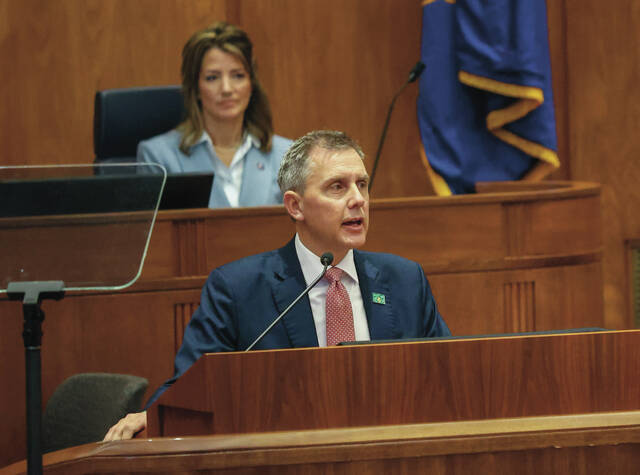
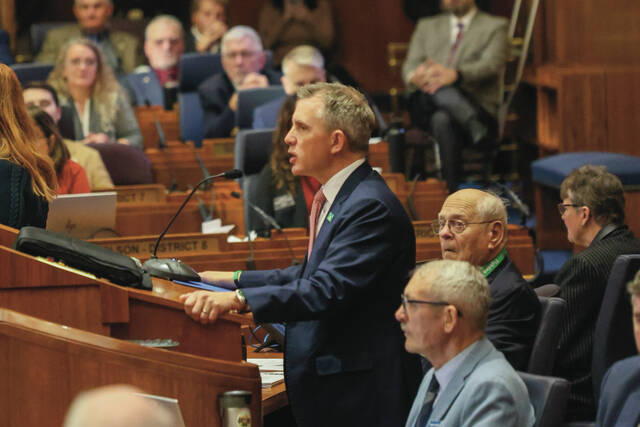
BISMARCK, N.D. – North Dakota’s rural health care challenges demand bold action and new approaches, Gov. Kelly Armstrong said in the annual State of the State Address on Wednesday, Jan. 21 as the 69th Legislative Assembly convened in a special session to appropriate $199 million in federal funding for a statewide Rural Health Transformation Program.
A week earlier, Armstrong issued an executive order to assemble the joint session of the House and Senate to address the funding awarded to North Dakota by the U.S. Centers for Medicare and Medicaid Services to support the program’s first year.
Livestreamed on the governor’s office website, the address began in the House of Representatives chamber of the State Capitol at approximately 10:16 a.m. CT and lasted a little over 15 minutes.
Armstrong thanked President Donald Trump for passing the legislation that awarded the funding for the program, which aims to strengthen rural health care by improving access, quality and health outcomes for North Dakotans in rural communities over the next five years.
“This program is a pivotal step forward in strengthening North Dakota health care across the state,” Armstrong said, adding that 75% of the state’s rural counties face primary care shortages. Almost half lack adequate dental care, and 17 counties have no practicing dentist. Mental health access is even more limited – 44 of 53 counties are designated shortage areas.
“Over the last 20 years, health care has concentrated in our largest communities, leaving our rural residents without adequate services,” he said. “These challenges demand bold action. By expanding access, promoting long-term wellness, and driving innovation, we have the chance to be the healthiest state in the nation.”
Armstrong thanked the Legislature’s Rural Health Transformation Committee for their input and work to advance four policy bills that helped improve the state’s application to CMS, resulting in an award that nearly doubled the base funding level of $100 million for each state. The bills will:
• Require the Presidential Physical Fitness test in physical education courses.
• Include nutrition education in continuing education requirements for physicians.
• Join the physician assistant licensure compact.
• Expand the scope of practice for pharmacists.
According to a press release from the governor’s office, the state submitted its program application Nov. 3, centering on four strategic initiatives:
• Strengthening and stabilizing the rural health workforce.
• Making North Dakota healthy again with preventive care and healthy eating.
• Bringing high-quality health care closer to home.
• Connecting technology, data and providers for a stronger North Dakota.
The Rural Health Transformation Program was part of the federal Working Families Tax Cut Act, which appropriated $50 billion over five years, with half allocated equally to all states. The other half was awarded to states based on their applications and metrics that show where the funding can make the most significant health impact in rural communities. The North Dakota Department of Health and Human Services expects the first release of subaward grant opportunities in the first quarter of 2026.
Lawmakers will consider an appropriations bill providing authority to spend $398 million for the first two years of the program. The $398 million is an estimate that represents double the $199 million awarded for the first year of the program. The second year’s award is expected in October 2026.
“This is a generational opportunity to not only improve how health care is delivered to our citizens, but also help revitalize communities as people continue to seek out safe places to live with strong health care, great schools and abundant economic opportunity,” he added.
Armstrong also addressed what would not be in the program. “We are not constructing new buildings. We are not standing up unsustainable programs and hiring new employees that will become North Dakota taxpayer obligations when this federal funding runs out. And we are not propping up underperforming programs that haven’t made North Dakotans healthier.”
“This is about transforming rural health and that means embracing 21st century solutions, not repeating policies of the past,” he added. “All government money comes from taxpayers in one way or another.”
“This program only works if North Dakota taxpayers have confidence in how we’re spending the money,” Armstrong said. “It needs to be authorized and appropriated quickly. We need to be responsible stewards and track it closely. And it needs to have a tremendous impact on the well-being of our citizens.”
In response to Armstrong’s address about the new program, House Minority Leader Zac Ista said, “Infusing nearly $200 million into improving rural healthcare in North Dakota—and potentially up to $1 billion over the next five years—has the potential to make a major positive impact for patients and providers. But the same Republican bill that authorized this investment also cut over $1 trillion from healthcare spending nationwide. In North Dakota, we risk cuts of $1-$2 billion in Medicaid alone in the next decade. Families will lose insurance coverage, patients will wait longer and pay more for care, and rural hospitals will risk closure. That’s a one-step-forward-two-steps back approach to solving the problem. As state leaders, we now have to invest the rural health funds wisely to mitigate the harm the Trump administration’s misguided policies will bring to North Dakota.”
Prior to beginning his address, Armstrong took a few moments to pause and remember Gov. Allen Olson, who died on Dec. 26 at age 87. His funeral was held on Jan. 22 in Edina, Minnesota and Armstrong directed flags across the state to be flown at half-staff in his honor. Olson had served as North Dakota’s 28th governor from 1981 to 1984, and as the state’s attorney general for eight years before that.
“To the Olson family, we extend our deepest sympathies and prayers, and our heartfelt thanks for his dedicated service to North Dakota,” Armstrong said, before asking those gathered in the chamber to join him in a moment of silence in Olson’s memory.
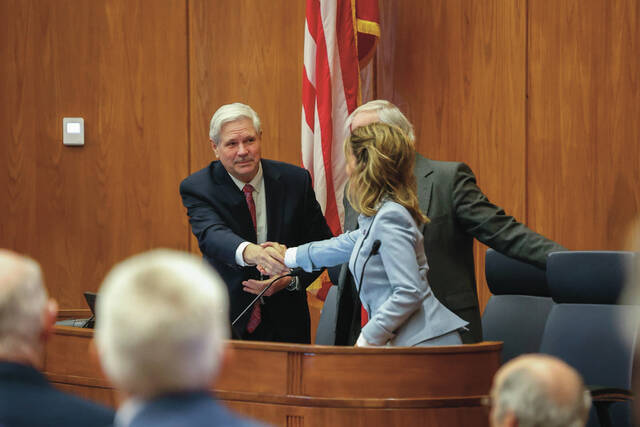
Armstrong thanked those in attendance, which included U.S. Sen. John Hoeven (R-N.D.) and Spirit Lake Nation Chairwoman Lonna Jackson-Street, who were both welcomed prior to the governor’s address by the Speaker of the House, Rep. Robin Weisz (R-Hurdsfield).